Steel Workshop or Export Manufacturer? The Differences Buyers Need to Spot
Vietnam’s steel manufacturing base is becoming more relevant to foreign buyers seeking cost-competitive production in Southeast Asia. As the supplier pool expands, international buyers have more factories to consider, but also more variation in how those suppliers operate.
Vietnam’s steel supplier landscape includes everything from small fabrication workshops serving local construction projects to industrial manufacturers with structured production systems for repeat orders and overseas markets.
The distinction matters because a supplier can produce a technically acceptable steel component without having the production capacity, quality systems, supporting records, or international trade infrastructure required for overseas supply.
For foreign buyers, the key question is therefore not simply “Can this factory make my product?” It is:
Can this supplier consistently manufacture, document, certify, and deliver my product at the required scale and to the standards of my destination market?
Several areas provide an effective first filter: production scale and capacity, certifications and compliance, international logistics, and long-term commercial reliability.
Production Scale and Capacity
The first difference buyers should identify is whether they are dealing with a job shop or an industrial-grade manufacturer. Both may describe themselves as steel factories, but their operating models can be fundamentally different.
A local workshop typically handles made-to-order, small or medium-batch fabrication for domestic customers. Its strengths may include flexibility and responsiveness for relatively straightforward jobs.
An international supplier, by contrast, is more likely to operate structured production processes designed around repeatability, documented quality control, and larger production volumes.
For buyers, factory size alone provides limited insight. A more useful measure is the amount of usable production capacity a supplier can reliably allocate to the project.
What should buyers verify?
Start with monthly production capacity rather than asking only for annual tonnage. A supplier’s stated annual output may look impressive but reveal little about how much production is actually available for a particular order.
Examine how that output is generated. Key areas include:
Number of production shifts and operating hours
Monthly output for products comparable to the project
Current production backlog and committed orders
Equipment for cutting, forming, welding, assembly, and finishing
Backup or redundant equipment for critical processes
Ability to increase output without materially extending lead times
Maximum component dimensions and individual weight
Availability of skilled workers during peak production periods
Equipment redundancy is particularly relevant for larger orders. A factory that depends on one critical cutting, welding, or finishing line may have sufficient nominal capacity but limited resilience if that equipment becomes unavailable.
The assessment should therefore focus on the volume the supplier can realistically commit within the required production window, rather than its maximum theoretical output.
Ask for evidence, not estimates.
International manufacturers are generally better positioned to demonstrate production capacity through schedules, output records, customer references, third-party audit reports, or factory audit documentation. These records allow buyers to compare stated production capabilities with actual activity.
A smaller workshop may not maintain the same level of formal reporting. That does not automatically make it unreliable; it simply means the buyer has less documented evidence on which to base the assessment.
A facility tour, either in person or through a live video walkthrough, can provide an additional reality check. Compare the supplier’s claims with its floor space, equipment, material storage, work-in-progress levels, crane capacity, and active production lines.
For a small one-off project, a capable workshop may be commercially appropriate. For repeat overseas orders, large structures, or schedules that cannot tolerate delays, an industrial manufacturer with documented production resources and redundancy is generally the safer sourcing option.
However, production capacity is only one part of international supply readiness. A factory may have the equipment and workforce to manufacture steel components while still lacking the certifications and compliance framework required to supply a foreign market.
Certifications and Compliance
For international steel sourcing, certification is one of the clearest ways to distinguish “can manufacture” from “can manufacture for this market.”
This is particularly important when supplying structural steel to Europe, where applicable products must meet the relevant requirements under the EU construction-products framework.
For international steel sourcing, certification is one way to distinguish general fabrication capability from readiness to supply a specific market.
This is particularly important for structural steel components intended for the European market. Depending on the product’s intended use, applicable harmonised technical specifications, and regulatory framework, requirements may include Factory Production Control (FPC), conformity assessment, a Declaration of Performance (DoP), and CE marking.
EN 1090-1 does not apply to every steel product. Buyers should first establish whether the specific component falls within its scope and then verify the conformity-assessment and documentation requirements applicable to that product and market.
For buyers, the key point is that an international manufacturer should not be assessed simply on whether it displays an ISO logo. The question is whether it can demonstrate the specific conformity pathway required for the product and destination market.
Understand the relationship between EN 1090, CE marking, and ISO standards.
For structural steel components falling within EN 1090-1, buyers should verify whether the manufacturer has the appropriate factory production control certification and conformity assessment arrangements.
ISO 9001 and ISO 3834 should also be interpreted correctly. ISO 9001 demonstrates a quality-management framework, while ISO 3834 addresses quality requirements for fusion welding. Both can provide useful evidence of process control, but an ISO 9001 certificate alone does not demonstrate that a structural steel product is CE compliant.
The question should, therefore, be:
Does the factory have the specific certification and production-control system required for my product—not simply “an ISO certificate”?
Request the documents relevant to the project and destination market.
Before approving a supplier, request the relevant certifications and supporting records, then verify their scope and validity.
These documents serve different purposes. Some demonstrate management or process controls, while others relate to product conformity, material traceability, or project-specific quality requirements. Not all will apply to every steel product or destination market.
Depending on the project and destination market, these may include the following:
ISO 9001: evidence of the manufacturer’s quality management system.
ISO 3834: relevant where controlled welding quality is required.
EN 1090-1 / Factory Production Control documentation: where the structural product falls within the applicable EN 1090 framework.
CE marking and Declaration of Performance (DoP): where required for the product under the applicable EU framework.
Material or mill certificates: to verify steel grade and material traceability.
Welding and inspection records: where required by the project specification or applicable standards.
The DoP deserves particular attention. Buyers should check the product identification, applicable standard, declared characteristics, and conformity-assessment information against the actual product being sourced.
A missing certificate is not automatically a quality problem.
A workshop serving only Vietnam’s domestic construction market may have none of these overseas-oriented certifications or records. That does not necessarily mean its fabrication quality is poor. It may simply reflect the markets and customers it has historically served.
The problem occurs when a buyer assumes that domestic fabrication capability is equivalent to international compliance.
For example, a workshop may be capable of fabricating a warehouse frame for a local contractor but have no established system for the documentation and conformity assessment required for the applicable EU market requirements.,
Certification should therefore be evaluated against the destination market and project scope, rather than treated as a generic measure of whether a factory is “good.”
Production capacity indicates whether a supplier can potentially make enough. Certification and compliance establish whether it can support the intended market.
Export Documentation, Logistics, and Market Experience
Production capability is only one part of international supply readiness. Once steel leaves the factory, the supplier must also manage customs paperwork, freight coordination, packaging, shipping terms, and destination-market requirements.
This is where an experienced international manufacturer can have a significant advantage over a workshop that has mainly served domestic customers.
Check whether international supply capability is operational.
A supplier claiming to serve overseas customers should be able to demonstrate more than a list of international customer names. Ask how frequently it ships internationally and whether cross-border shipments are handled by an internal team or an external intermediary.
Key checkpoints include the following:
A dedicated export or international sales team
Experience with relevant Incoterms, such as FOB, CIF, or DAP
Previous shipments to the buyer’s specific country or region
Established relationships with freight forwarders and customs brokers
Familiarity with export packing, container loading, and shipping documentation
Ability to provide previous examples of shipping paperwork where commercially appropriate
Market experience is also relevant. A supplier that regularly ships to the buyer’s destination market may already understand the paperwork, logistics, packaging, and import procedures involved.
For a European buyer, for example, a supplier with regular EU shipments may be more valuable than one with large overall production capacity but no experience with European import procedures.
Look beyond the factory quotation.
A workshop without established international logistics infrastructure may provide an attractive factory-gate price while overlooking costs that emerge later. These can include export packaging, container optimization, inland transportation, customs processing, paperwork, freight coordination, or additional handling requirements for oversized steel components.
This is particularly important for structural steel, where component dimensions, weight, corrosion protection, and packaging methods can materially affect shipping economics.
Buyers should therefore compare suppliers using total landed cost, rather than unit price alone. Ask the manufacturer to specify what is included in the quotation, where responsibility transfers under the selected Incoterm, and which costs remain with the buyer.
The same principle applies to lead times. A supplier may quote a 30-day production schedule but fail to account for material procurement, inspection, shipping paperwork, port congestion, or vessel availability.
This makes international logistics an important differentiator. A smaller workshop may still be suitable for a straightforward local project, but international procurement requires a partner whose operational system extends beyond the factory gate.
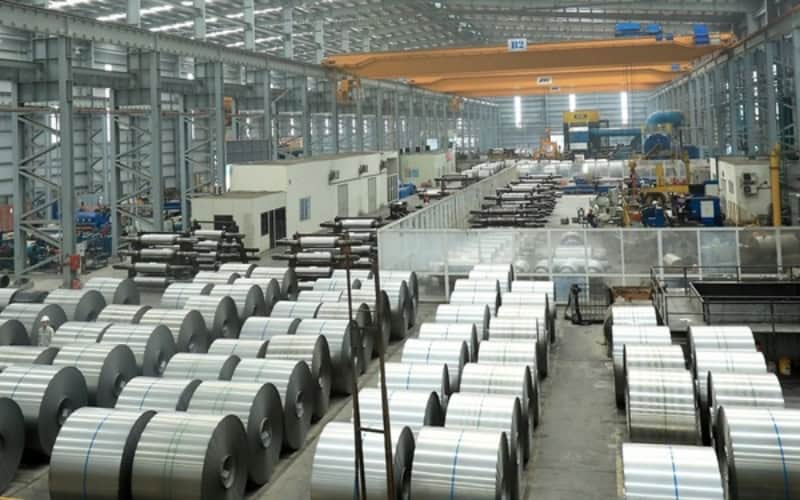
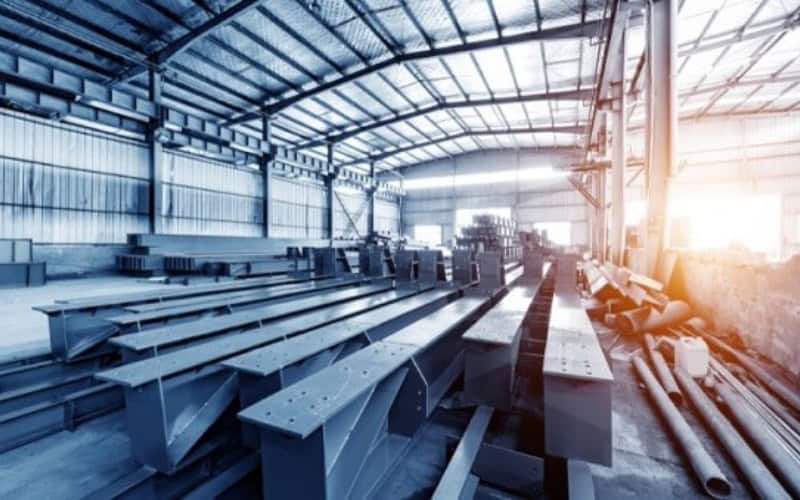
Steel workshop showcasing manufacturing process for export and industrial use.
Pricing Transparency and Long-Term Reliability
Price is usually one of the first factors buyers compare, but it can also be one of the least reliable indicators when evaluating a steel supplier.
A workshop’s quotation may appear cheaper because it excludes costs that an international manufacturer has already incorporated into its commercial model, including compliance, inspection, export packaging, paperwork, and logistics coordination.
Steel input prices can also change. For buyers, this reinforces the need to understand how a supplier calculates and updates its pricing rather than treating the initial quotation as a complete measure of competitiveness.
Compare the Full Cost Scope
A meaningful comparison should separate the major cost components rather than comparing headline prices.
Ask whether the quotation includes:
Required steel grades and material certificates
Fabrication and welding
Surface treatment or coating
Quality inspection and testing
Packaging suitable for international transport
Export documentation
Inland transportation
Customs-related charges
Freight under the selected Incoterm
A supplier that can clearly explain why its price changes when steel input costs, specifications, freight rates, or compliance criteria change demonstrates stronger commercial control.
As with production claims, a significant difference between quotations should be investigated rather than accepted at face value. The gap may be legitimate, such as greater production efficiency or better material sourcing, but it could also indicate that certain specifications or services have been omitted from the scope.
Evaluate reliability over repeated orders.
For long-term sourcing, reliability should be assessed as a pattern of performance, not as a single successful shipment.
A strong manufacturing partner should be able to maintain consistent output across repeat orders, respond effectively when specifications change, and provide production or quality information when requested. The ability to identify a problem early and communicate corrective action is often more valuable than simply promising that no problems will occur.
Before committing to significant production volumes, foreign buyers should conduct practical due diligence:
Request references from overseas customers with comparable products or markets where possible.
Verify certificates directly with the issuing organization, particularly when certification is a critical qualification criterion.
Review production and quality records to determine whether supplier claims are supported by evidence.
Start with a controlled trial order before moving to full-volume or long-term contracts.
Measure actual performance against agreed quality, lead time, paperwork, and communication criteria.
The trial order is particularly useful because it tests the supplier’s entire operating model, not merely whether it can manufacture an acceptable sample.
Ultimately, the cheapest supplier at the quotation stage is not necessarily the lowest-cost partner over the life of the relationship. A reliable manufacturer can reduce hidden costs associated with delays, rejected goods, rework, paperwork errors, and repeated quality issues.
Conclusion
The distinction between a steel workshop and an export manufacturer is not simply a question of factory size. A smaller facility may be highly capable for customized domestic projects, while a larger manufacturer may still be unsuitable if its systems do not match the buyer’s technical or market criteria.
For international buyers, the more relevant test is whether the supplier is structurally prepared to support cross-border manufacturing.
That assessment should begin with production capacity: Can the facility allocate sufficient volume, maintain repeatability, and scale without compromising lead times?
Next, verify the compliance infrastructure: Does it hold the certifications and maintain the production-control systems required for the destination market?
Then look beyond the factory floor. Can the supplier manage export paperwork, freight coordination, customs requirements, and international packaging?
Finally, assess commercial reliability through transparent pricing, overseas references, quality records, and a controlled trial order.
The right choice is therefore not necessarily the biggest factory or the lowest quotation. It is the supplier whose production capability, certification, international logistics infrastructure, pricing discipline, and long-term reliability match the requirements of the project and destination market.
In practical terms, choose a workshop when flexibility and small-batch production are the priority. Choose an export manufacturer when the project depends on repeatable quality, international compliance, documented processes, scalable capacity, and dependable cross-border delivery.
That distinction can determine whether sourcing from Vietnam remains a one-off transaction or develops into a sustainable manufacturing partnership.