How to Choose the Right Manufacturing Partner in Vietnam
Modern equipment, international certifications and a portfolio of recognised clients can create immediate confidence. For many buyers, these signs suggest that the search for a manufacturing partner is almost complete.
However, strong credentials do not guarantee that a company can meet the buyer’s specific requirements.
Its operations may be designed for volumes far above what the buyer needs. Its team may prefer finished designs rather than items that still require development. Its machinery may be suitable for different materials, tolerances or finishing methods. Even communication and response time can affect whether the relationship works in practice.
This is why manufacturing supplier selection should not focus on finding the “best” company in general. The real goal is to identify a partner that can handle the required item, quantity, budget and level of support.
For international SMEs sourcing from Vietnam, making the right choice early can reduce wasted sampling, prevent unsuitable tooling decisions and avoid delays after money has already been committed.
Choosing the Right Manufacturing Partner Starts With a Clear Brief
A large manufacturer may be ideal for an established brand purchasing hundreds of thousands of units each year. The same company may be a poor choice for a buyer that needs a small trial batch, several sample revisions and close support during development. A smaller operation may offer greater flexibility, faster feedback and more direct attention from management. However, it may not have the machinery, internal controls or capacity needed when volumes increase.
Neither option is automatically better. The evaluation should start with a clear description of what the buyer requires. This includes materials, construction, expected volume, target price, destination market, compliance requirements, packaging and launch timing.
The stage of development also matters. A finished design with complete drawings requires less support than an early concept that still needs material recommendations, engineering input or adjustments.
Commercial terms should be reviewed at the same time. Minimum quantities, tooling ownership, payment terms, lead times and willingness to handle initial batches can affect the result as much as equipment.
The right partner is therefore not always the largest or most established company. It is the one that can support the buyer’s current requirements and future growth.
Why Strong Capabilities May Still Miss the Brief
Manufacturers often present their capabilities through annual output, machine lists, export markets, certifications and major clients. These indicators are useful, but they do not explain how the buyer’s work will be handled in practice.
Available capacity is a good example. A plant may report a high yearly output while most of its lines are already reserved for existing customers. A new buyer may then receive limited time slots or lower priority during busy periods.
Volume can create another mismatch. Highly automated operations are usually designed to produce large quantities efficiently. Small batches may require additional setup and interrupt the normal workflow. The company may accept the business but give it less attention than larger accounts.
The opposite situation can also happen. A flexible workshop may perform well during sampling but struggle when demand grows. Higher volumes may lead to overtime, frequent staff changes or the use of outside workshops without informing the buyer.
Experience should also be checked carefully. Working in the same industry does not mean that a company has handled the exact material, structure or method required.
A metalworking business may have strong machining experience but limited knowledge of a particular coating. A packaging producer may make similar-looking boxes without understanding the strength needed for international shipping. A garment maker may know the fabric but have little experience with the required sewing technique.
A company can therefore be reliable and well managed while still being unsuitable for a specific brief.
Where Problems Between Buyers and Manufacturers Usually Appear
Problems generally appear in three areas: manufacturing ability, business terms and daily communication. Manufacturing ability covers whether the company can repeatedly meet the required specifications. Buyers should consider material handling, tooling, tolerances, testing methods, traceability and checks during each stage of the work.
Business terms determine whether the cooperation is realistic. Minimum quantities, development fees, payment conditions and delivery schedules must be suitable for the buyer’s sales model and budget.
Daily communication includes response time, transparency and responsibility when an issue appears. These points are especially important when the buyer manages everything from another country.
An opening quantity that is much higher than expected can be an early warning sign. So can reluctance to revise samples, unclear answers about outside workshops, limited proof of similar experience or uncertainty over who will handle defects.
A candidate may also agree too quickly. An immediate “yes” can sound encouraging, but it may mean that the drawings, materials or testing requirements have not been reviewed carefully. Later, the company may request design changes, higher quantities or extra charges after development has already started.
Another risk appears when sales staff provide confident answers without checking with engineers or line managers. A quotation may appear complete even though the people responsible for execution have not reviewed the details.
Websites, presentations and price lists are therefore not enough. Buyers need clear evidence that the company understands the requirements and can deliver under normal working conditions.
The Hidden Costs of Choosing the Wrong Partner
The consequences of a poor choice are not always immediate. They often appear gradually, after the buyer has already invested time and money.
Sampling is usually the first area where costs increase. Repeated revisions create shipping expenses, internal review work and delays. When the underlying method is unsuitable, each new sample may solve one issue while creating another.
Tooling can make the situation more difficult. Once moulds, dies or fixtures have been paid for, changing direction becomes more complicated. The equipment may not be transferable, ownership may be unclear, or the buyer may not have all the drawings needed to reproduce it elsewhere.
Delays are another major cost. Missed approvals, unexpected material changes or slow corrective action can push back a launch by weeks or months. A seasonal business may lose an entire sales period.
Management time should also be included in the calculation. A weak partnership often requires constant follow-up, repeated explanations and intervention in problems that should have been identified earlier.
The initial unit price may look attractive, but the savings can disappear through additional supervision, rework and late deliveries.
In more serious cases, the problem becomes visible only after the first batch starts. Results may become inconsistent when volumes increase. Delivery dates may move because enough capacity was never reserved. Some steps may be transferred to another workshop without approval.
By that point, changing partners may require new samples, replacement tooling and another round of evaluation.
The lowest quotation is therefore not always the least expensive option. Buyers should consider the full cost of delays, corrections and restarting with another company.
How Buyers Can Validate a Manufacturer Before Committing
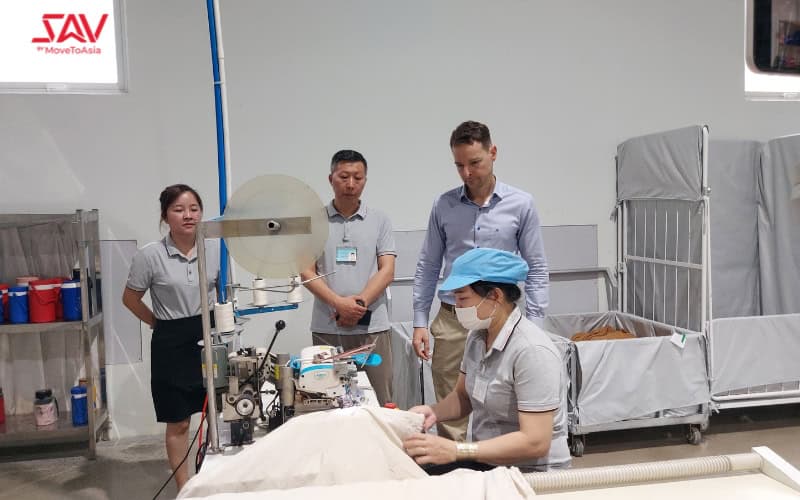
Guillaume Rondan, CEO of SAV, validates a textile manufacturer in Vietnam
Validation should begin before any major payment or purchase commitment.
The first step is to prepare a clear brief covering specifications, expected quantities, target market, testing, packaging, timing and the support needed during development. Without this information, companies may be compared using different assumptions.
Buyers should then request evidence that directly relates to their requirements. This may include examples of similar items, an explanation of the proposed method, details of what will be completed internally and information about the main inspection steps.
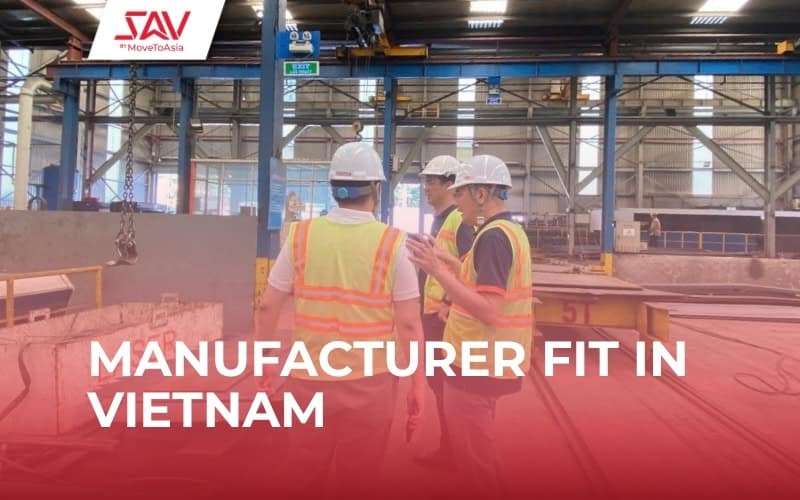
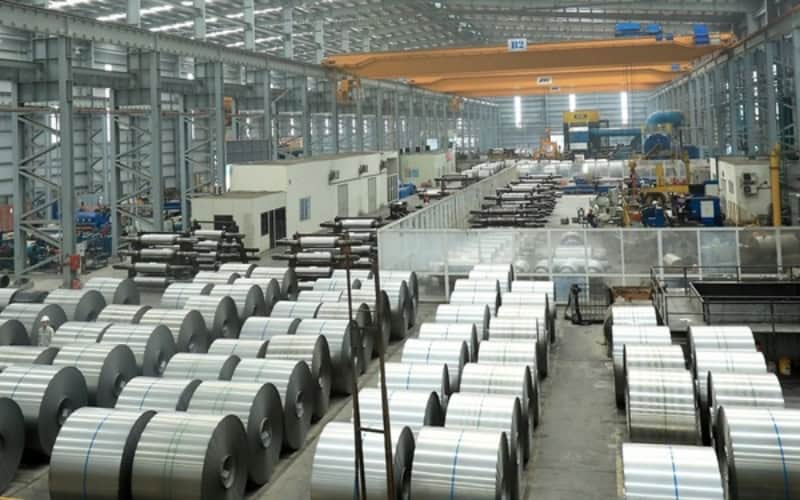
An on-site visit can confirm whether those answers reflect reality. The review should look beyond clean floors and modern machinery. It should examine material storage, workflow, operator skills, inspection equipment, maintenance, current workload and how similar items are being handled.
Sample development provides another useful test. It shows how the team understands instructions, asks questions, handles corrections and responds when the result does not meet expectations.
For overseas buyers, this stage can be difficult to manage remotely. Language differences, local business practices and limited visibility into workload or outside workshops can make written answers appear more complete than they are.
Support from a local team that understands the manufacturing market can make the review more reliable. Local specialists can communicate the requirements, conduct visits and speak directly with operations managers instead of relying only on sales representatives.
They can also check whether machinery is operating, whether similar work is genuinely completed on-site, how busy the facility is and whether the proposed method matches the quotation.
Their role is not to make the decision for the buyer. It is to provide clear and verified information so that the final choice is based on facts rather than assumptions.
A reliable manufacturing supplier selection process should combine document checks, direct discussions, an on-site review and sample evaluation. Buyers should increase their commitment step by step, only after the chosen partner has shown that it can meet the agreed requirements.
Conclusion
A well-equipped manufacturer with respected clients can still be the wrong choice. The issue may be volume, experience, response time, development support or business terms. This does not necessarily mean that the company is weak. It simply means that its way of working does not match what the buyer requires.
Buyers should therefore examine how the work will be handled, not only how impressive the facility appears. For international SMEs sourcing from Vietnam, careful validation is especially valuable. Distance can hide important details about workload, outside workshops, sample handling and internal communication.
The right partner is the one that can meet the specifications, handle the required volume and provide the support needed from development to delivery.