Vietnam’s expanding manufacturing sector is creating more sourcing opportunities for international buyers, but a larger supplier pool also makes factory due diligence more important. A professional website, competitive quotation, or impressive factory profile can establish initial credibility without proving that a manufacturer has the operational capability, traceable supply chain, or compliance systems required for international trade.
This matters particularly in 2027, as trade authorities are paying closer attention to product origin, transshipment, and supply-chain documentation. At the same time, manufacturers face workforce and capacity pressures that can affect production consistency.
For foreign buyers, spotting factory red flags in Vietnam is therefore not about assuming that a particular supplier is unreliable. It is about identifying discrepancies early, before a deposit, production commitment, or shipment turns a manageable concern into a costly commercial problem. The most effective approach is to examine both documentation and factory-floor reality, then verify whether the two tell the same story.
Origin and Documentation Red Flags
For buyers exporting Vietnamese-made products to the US, origin documentation should be among the first areas examined during supplier qualification. The reason is straightforward: a factory can produce a technically acceptable product while still exposing the buyer to significant customs and tariff risk if the declared origin cannot be substantiated.
US Customs and Border Protection (CBP) has explicitly warned about illegal transshipment, including cases where goods from China are routed through third countries, lightly processed or relabeled, and subsequently exported as products of another origin. CBP’s guidance states that importers and exporters are responsible for reviewing the accuracy of information filed with customs and highlights transshipment as a particular concern for goods subject to trade remedies.
Verify Product Origin
For US-bound goods, buyers should understand the concept of substantial transformation rather than treating a Vietnamese certificate of origin as sufficient evidence.
For US-bound goods, buyers should understand how US country-of-origin rules apply to their specific products. Under the substantial transformation principle, CBP generally examines whether processing in a country creates a new and different article of commerce. This assessment is fact-specific and considers factors such as the nature and complexity of manufacturing, the role of imported components, and the extent of processing performed locally. A Vietnamese certificate of origin alone should not be treated as conclusive proof that a product qualifies as Vietnamese-origin under US customs rules.
This makes the supplier’s bill of materials and production process particularly important. Buyers should be cautious if a factory:
Cannot provide a complete bill of materials or supplier-origin information.
Gives vague answers about where major components or raw materials come from.
Claims Vietnamese origin while most critical manufacturing appears to occur elsewhere.
Provides certificates or supporting records that appear newly prepared specifically for the transaction rather than generated through normal production controls.
These signals do not automatically prove wrongdoing. They indicate that additional verification is warranted before the buyer relies on the supplier’s origin claim.
Check Origin Evidence
Vietnamese authorities have previously uncovered documented origin-fraud cases. Vietnam Briefing reported a Ho Chi Minh City company that allegedly issued fraudulent certificates of origin to approximately 30 enterprises, involving export values exceeding US$25.8 million.
For an importer, the key issue is not simply whether the factory itself intended to misrepresent origin. Customs authorities generally assess the imported goods and supporting declarations, meaning the buyer can face duties, delays, investigations, or other commercial consequences when documentation cannot withstand scrutiny.
A strong supplier should therefore be able to demonstrate a traceable chain from incoming materials to finished goods. Buyers should request production records, supplier information, material certificates, invoices where appropriate, and origin documentation that can be reconciled rather than reviewing each document in isolation.
Once documentation passes the initial test, the next step is to determine whether the physical factory actually supports what those records claim.
Operational Red Flags
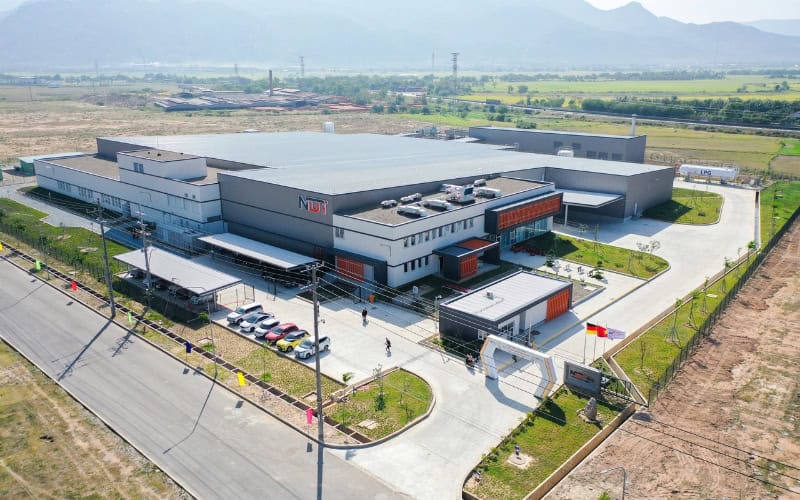
Documentation can tell buyers what a supplier claims to do. A factory visit can reveal how the business actually operates. This distinction is especially useful when evaluating manufacturers whose stated output, product range, or export volume appears unusually large relative to their visible infrastructure.
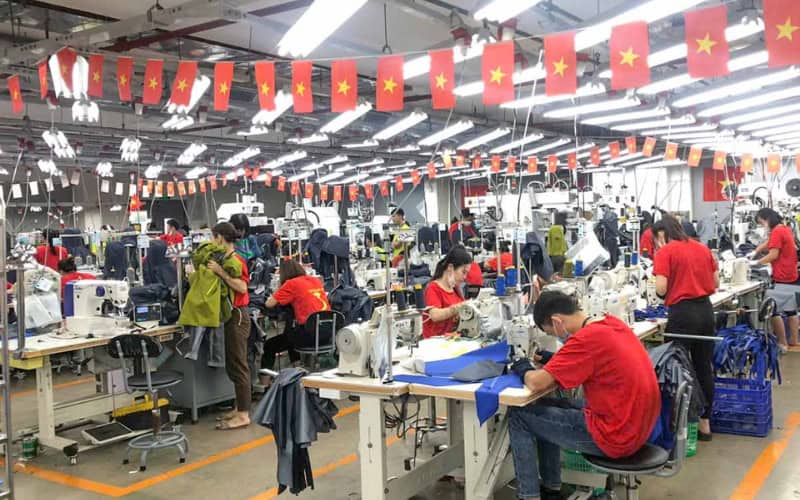
One of the clearest warning signs is a mismatch between the production process described by the supplier and what is observable on the factory floor. A manufacturer claiming substantial in-house production should normally have equipment, workstations, material flows, and personnel corresponding to the processes it says it performs.
If the facility has limited machining, fabrication, finishing, or assembly infrastructure but presents a large volume of finished goods, buyers should investigate whether significant production is actually outsourced or whether the company functions primarily as a trading or pass-through operation. Outsourcing itself is not necessarily problematic; the concern is whether it is disclosed, controlled, and compatible with the buyer’s quality and origin requirements.
Compare claimed capacity with physical evidence
A factory’s stated annual capacity should make sense when compared with its equipment, floor space, inventory, staffing, and production schedule. A supplier claiming high-volume output from a small facility with limited machinery deserves closer examination.
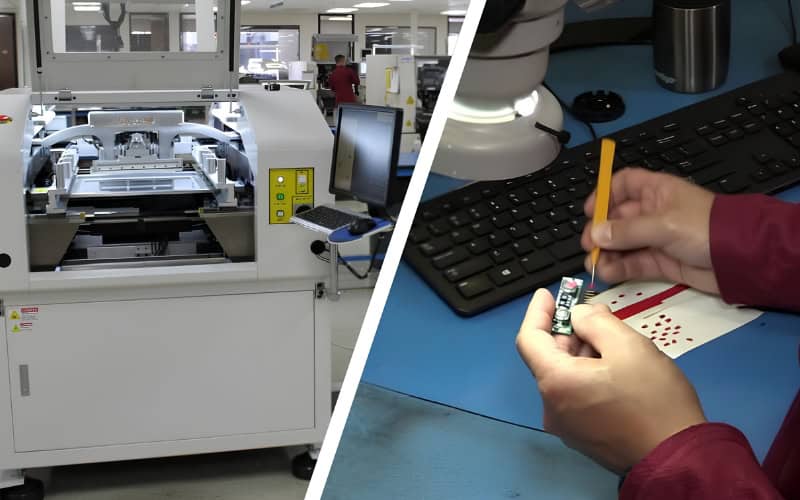
During an audit, buyers should look beyond the newest machines displayed for visitors. Useful signals include whether equipment is operating, how materials move through production, whether work-in-progress is consistent with reported order volumes, and whether maintenance appears systematic.
Workforce evidence is equally important. Vietnam’s labor market continues to face a skills gap: only 29.2% of workers held a recognized diploma or certificate by the end of 2025, according to data cited by Vietnam Briefing. This does not indicate that Vietnamese manufacturers lack skilled workers; rather, it means buyers should avoid assuming that a factory’s stated headcount automatically translates into sufficient technical capacity.
Look for unexplained gaps between the number of employees, production shifts, equipment available, and claimed output. High turnover among operators or QC personnel can also indicate that the factory may struggle to maintain consistent execution.
Cross-Check Factory Records
The most useful factory audit is not simply a tour. It is a cross-check between physical evidence and previously submitted information.
For example, compare:
What the supplier claims
What the buyer should verify
Annual production capacity
Equipment, shifts, staffing and floor space
In-house manufacturing
Actual machinery and production processes
Large export volumes
Finished-goods inventory and shipping records
Strong QC capability
QC personnel, inspection equipment and records
Stable workforce
Employee tenure and operator availability
Extensive product range
Actual production lines and technical resources
A discrepancy does not necessarily mean the supplier should be rejected. It should trigger a more specific question: What explains the difference?
A credible manufacturer should be able to explain whether production is outsourced, whether additional facilities are used, whether capacity figures represent theoretical maximum output, or whether certain processes are handled by approved subcontractors.
Ultimately, the strongest factory verification process combines origin documentation, operational evidence, and consistency checks. When the paperwork, production floor, workforce, and commercial history tell the same story, buyers have a much stronger basis for moving forward.
Red Flags in How a Factory Communicates and Prices
A factory’s commercial behavior can reveal weaknesses that are difficult to detect from certificates, product photos, or a polished website. For international buyers, the issue is not whether a supplier offers a competitive price, but whether the quotation, production claims, and communication are consistent with the capability being presented.
One warning sign is a price that sits significantly below the market range for the stated material grade, certification level, or production scope. A low quotation may reflect genuine efficiency, but it can also indicate omitted processes, lower-grade inputs, outsourced production, or costs that will appear later through quality failures and additional logistics. Buyers should therefore compare quotations on a like-for-like basis rather than selecting the lowest headline price.
The same principle applies to due diligence. A credible manufacturer should be able to explain its production process and accommodate reasonable verification. Reluctance to permit a third-party inspection, refusal to share basic production documentation, or pressure to place an order before verification is completed should be treated as a commercial risk.
A particularly important red flag is the middleman presenting itself as a factory. This can become apparent when the sales contact cannot clearly explain which processes are performed in-house, gives inconsistent answers about equipment, or cannot identify the source of key raw materials.
Buyers can test this without creating an adversarial process. Ask the same question about sourcing, production capacity, or quality control in different conversations, for example, first with the sales representative and later with the factory or production manager. Consistent answers across functions are a useful indicator of operational transparency.
Building a Verification Process
Factory red flags are most valuable when they are identified before a purchase order becomes a financial or compliance liability. A robust verification process should therefore combine documentary evidence, physical inspection, and independent cross-checking rather than relying on a single factory visit or certification.
The first step is document verification. Before committing to a large-volume order, buyers should request the documents needed to establish where the product comes from and how it is made. These should include the complete bill of materials, certificates of origin, relevant product or material certificates, supplier declarations for Chinese-origin inputs by value, and recent factory audit records.
The second step is physical verification. Depending on order value and risk, this can involve an in-person factory audit or an independent third-party inspection. The objective is to compare documented claims with what is actually visible: machinery, production processes, staffing, raw-material inventory, finished goods, and production capacity.
The third step is independent cross-checking. Company information, export history, ownership details, and other available records should be reviewed independently rather than accepted solely from the supplier. Vietnam’s cooperation with US authorities on customs and origin-related enforcement has also expanded, increasing the importance of traceable and verifiable supplier information.
Vietnam’s Ministry of Industry and Trade has also indicated stronger inspection and enforcement against origin fraud, reinforcing that supplier verification is increasingly aligned with the direction of local regulatory enforcement.
For higher-risk or high-value sourcing projects, buyers can use a simple sequence:
This approach avoids treating verification as a one-time administrative exercise. A supplier that passes documentary screening should still demonstrate that its physical operations match those claims, while a successful factory audit should ideally be followed by a controlled trial before substantial volume is released.
Most importantly, buyers should establish minimum documentation requirements before negotiations reach the final contracting stage. This prevents commercial pressure from weakening due diligence once production schedules and deposits are already involved.
In 2026, the cost of overlooking a red flag can extend well beyond a defective shipment. Origin violations or inaccurate sourcing declarations can expose importers to additional duties, shipment disruption, enforcement action, and reputational damage. Consequently, factory verification should be treated as part of procurement risk management, not an optional service performed only when a supplier appears suspicious.
For companies entering or expanding sourcing in Vietnam, a structured factory verification process can turn supplier selection from a profile-based decision into an evidence-based one.
Conclusion
Vietnam remains an increasingly important sourcing base, but a growing manufacturing ecosystem also means buyers will encounter suppliers with very different levels of capability, transparency, and compliance maturity. The key is not to assume that every factory profile represents the same level of operational reliability.
The most effective approach is to look beyond the sales presentation. Verify origin and documentation, inspect actual production capabilities, test the consistency of supplier communications, and cross-check commercial claims against independent evidence. For higher-value orders, a third-party factory audit and controlled trial order can provide an additional layer of protection before full-scale production.
Ultimately, knowing how to spot factory red flags in Vietnam is less about finding reasons to reject suppliers and more about identifying which suppliers can withstand scrutiny. In a market where compliance expectations are becoming stricter, proactive verification gives international buyers a stronger basis for building reliable, defensible, and long-term sourcing relationships.
If supplier selection is critical to your next Vietnam sourcing project, a structured factory verification or audit can help turn uncertainty into documented evidence before the purchase order is signed.